Cultural specificity vs cultural stereotype
8-minute read. AI bias across all nine protected characteristics. Specificity is the antidote.
A stereotype is a shortcut. A man is not going to be as good a carer as a woman. A father is the lesser parent. A trans woman is going through a phase. A wheelchair user cannot consent. A person with a learning disability cannot parent. None of these are true of any one person. All of them are patterns AI has absorbed from the internet and from the records we have already written.
This whole module is about anti-oppressive practice. Section 4 is the section where we widen the lens beyond race. AI bias does not stop at race. It runs through every one of the nine protected characteristics, and through caring responsibilities too. Edgar and Delroy are still with us. So is everyone else on your caseload.
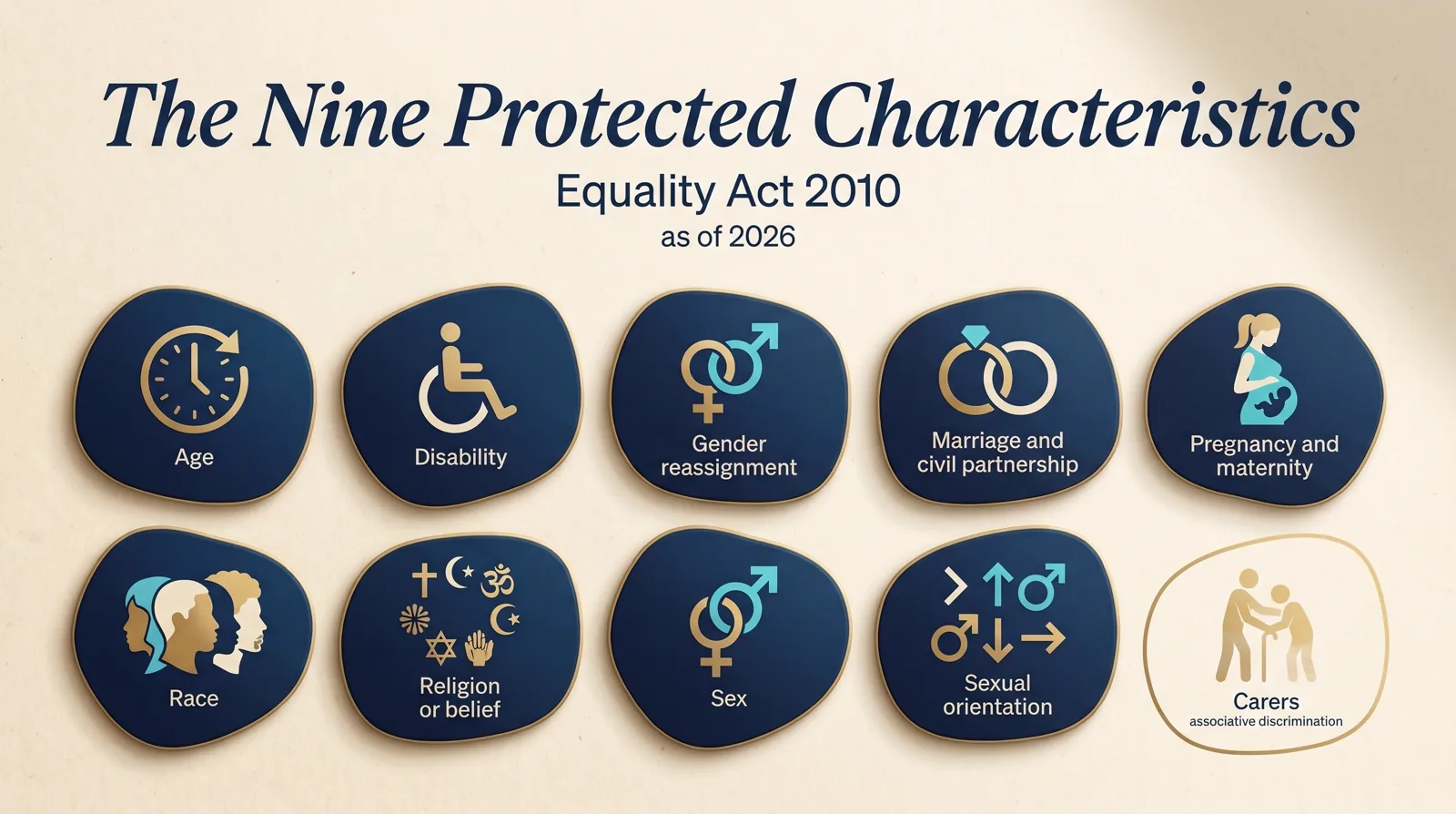
Carers, and the tenth thing AI gets wrong
Carers are not a tenth protected characteristic, but discrimination against someone because they care for a disabled or older person is associative discrimination, and it is unlawful. AI flattens carers in particular ways: as saints, as burdens, as invisible. None of those are the carer in front of you.
When you brief AI without naming which characteristics are at play in the case, AI defaults to its statistical average. The statistical average of a million internet sentences about parenting is not your case. It is a stereotype.
Power dynamics, and the third power in the room
Every social work record sits inside a power relationship. You, as the social worker, hold statutory power. The service user does not. The child holds even less. That asymmetry is the first thing AOP teaches you to see.
AI is now a third power in the room, and it is worth treating as a power rather than a neutral tool. It speaks with a confident clinical register that practitioners mistake for objectivity, and it produces text that managers, panels, and courts read as professional. When AI describes a Muslim father as disengaged, that description carries the weight of the AI's confidence on top of yours. Two powers stacked, with the family at the bottom of both.
Naming this is part of the work. The service user may not have consented to your use of a co-pilot to draft words about them. Consent runs through everything we do, and AI does not change that.
Direct discrimination is loud. Indirect discrimination is the AI's specialism.
Direct discrimination is the obvious kind. No women allowed. You can see it. You challenge it.
Indirect discrimination is harder. A policy or a phrasing that looks neutral but disadvantages a group with a protected characteristic. AI mass-produces indirect discrimination, because it works at the level of phrasing, register, and emphasis. The disadvantage is in how the sentence lands, not in what it explicitly says.
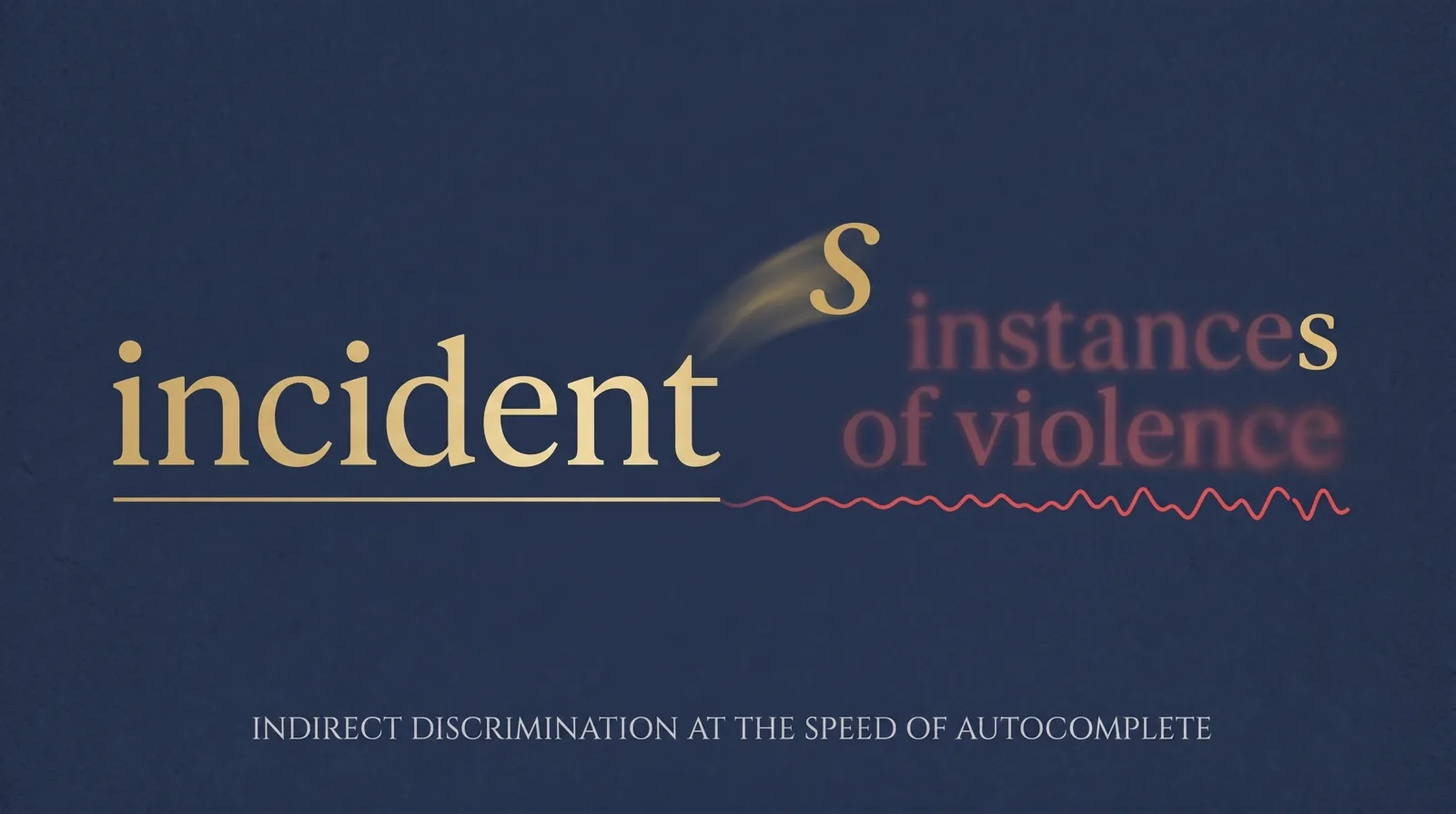
A worked example. You give AI bullet points. AI returns a paragraph. Read both carefully.
Muslim father, three children, recently widowed, homeless once.
Mr Hussain's chaotic lifestyle and instances of family violence place the children at significant risk, with cultural factors compounding concern.
You wrote homeless once. AI wrote chaotic lifestyle. You wrote nothing about violence. AI added an 's' onto an incident that never happened, plural, and reframed it as a pattern. You said nothing about religion as a risk. AI added cultural factors compounding concern out of thin air. Three sentences of pure confabulation, in a confident professional register, with Mr Hussain's name on the page.
That is indirect discrimination at the speed of autocomplete.
Specificity beats stereotype: three protected-characteristic walk-throughs
Gender reassignment
A trans service user has a legal name and a name they use. AI defaults to whichever name appears most often in the source documents you give it. If old records use a dead name, AI will too. If you have not told AI the person's pronouns, it will guess from the dead name and get them wrong every time. Specificity here looks like: "This person's name is Jane. Her former name appears in records dated before 2023 and should not be used in this assessment. Her pronouns are she/her."
The same principle applies to chosen names that are not legal name changes. A person whose passport says John may be known to everyone in their life as Jane. AI does not know this unless you tell it. The record needs to.
Disability
Assessments written with AI assistance default to deficit framing for disabled people. Cannot. Unable. Requires support with. Lacks capacity to. The grammar of the assessment becomes the grammar of subtraction. What the person can do, what they enjoy, what they contribute, what they decide for themselves disappears.
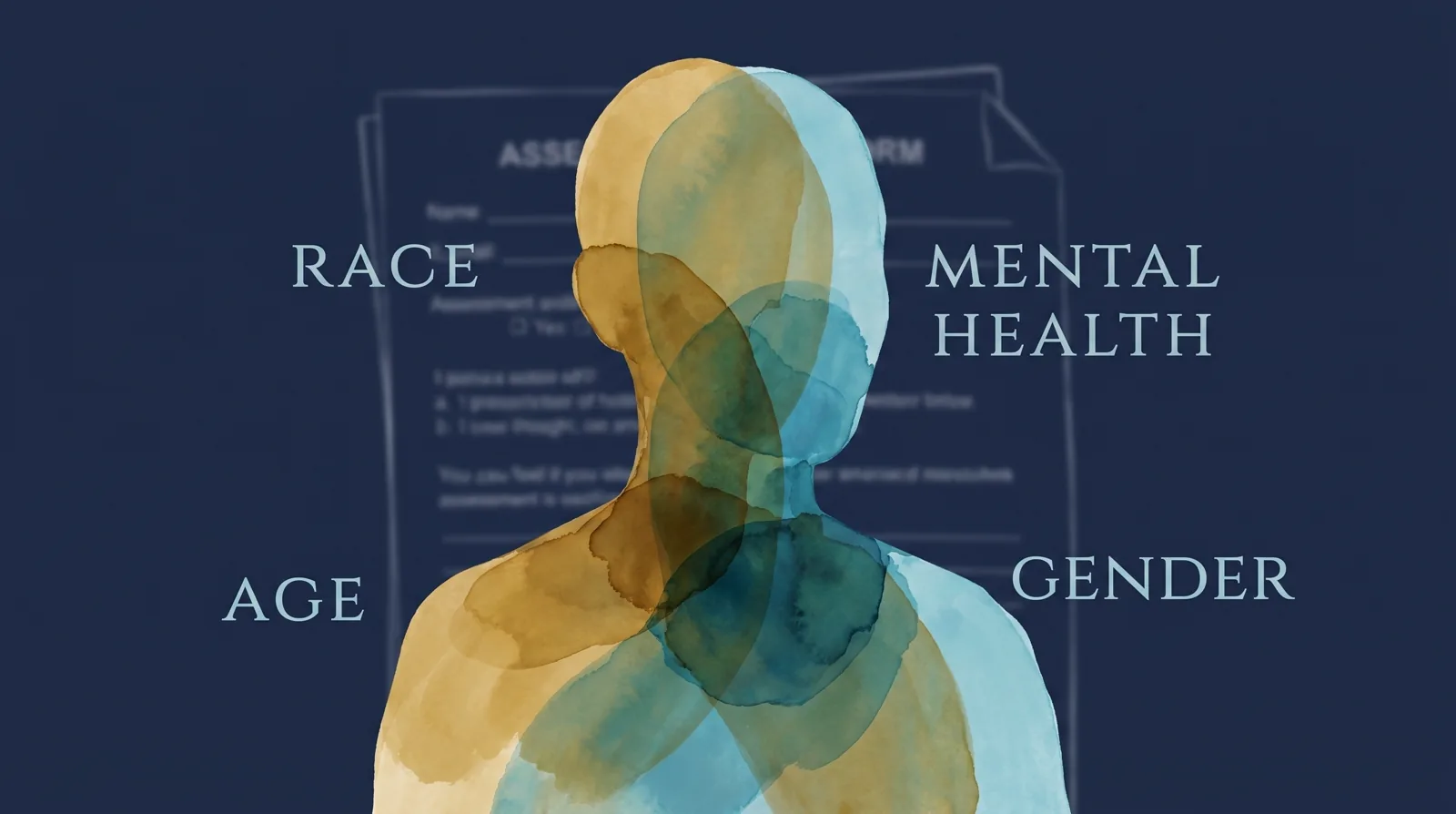
Hidden disabilities make this worse. AI drafts confidently about visible disability and goes silent on what it cannot see. A white man with a long-term mental health condition who is also a low-paid shift worker is described by AI almost entirely through the lens of unreliability and risk, with the mental-health condition treated as a footnote and the working pattern not mentioned at all. Intersectionality is not a buzzword. It is the case in front of you, and AI flattens it routinely, whichever characteristics intersect.
Sex
AI under-resources women and over-pathologises men, especially fathers. Women are assumed to cope. Men are assumed to be a risk. Society treats fathers as the lesser parent, and the records we have written for a century reflect that. A father seeking support for his children is more likely to be drafted as a safeguarding concern than a mother in identical circumstances. AI did not invent that pattern; it absorbed it from records written exactly this way for a century, and now hands it back to you with confidence.
The fix is to name the case specifically. "Mr Williams is the primary carer for his two children since their mother's death in 2024. He is seeking respite. This is a request for support, not a risk concern." That sentence in your prompt changes the entire shape of what AI returns.
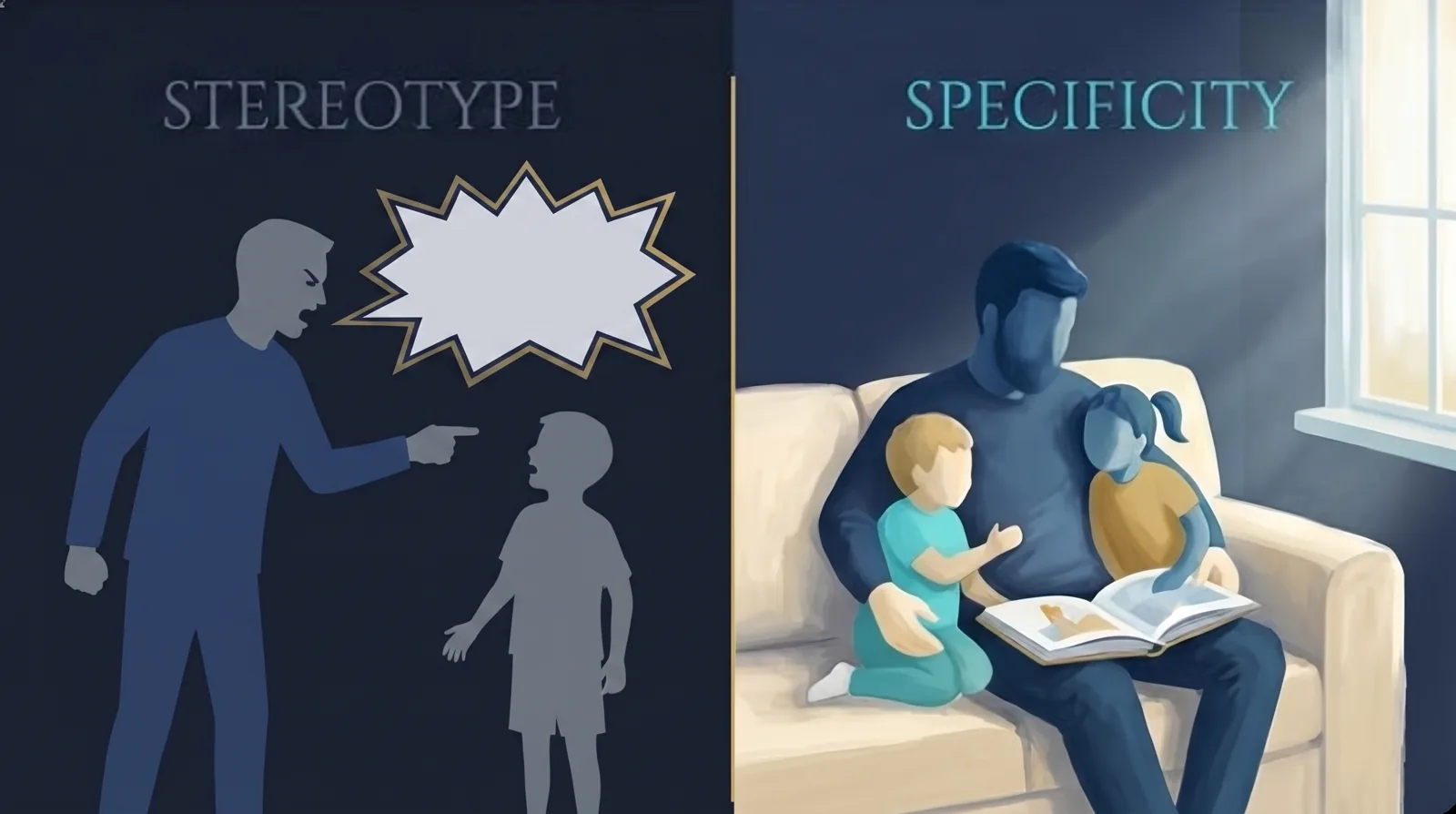
You set the frame. AI mirrors it back at you, amplified.
If you brief AI in deficit language, it returns deficit language with extra weight. If you brief AI in risk-averse language, it returns risk-aversion with extra weight. If you brief AI with cultural specificity, named voices, named evidence, and named outcomes (the VERA:H discipline from Section 3), it has less room to fall back on stereotype.
Your words matter twice now. Once because they are yours, and once because AI is going to take them and amplify them back into the record with your name on it.
Specificity narrows the gap. It does not close it. Even with a perfectly named prompt, AI will still draw on patterns from its training data that you cannot see. A trans person's record may still drift toward the dead name on the third re-prompt. A father's record may still tilt toward risk on the fifth paragraph. Bias does not disappear because you asked nicely.
What specificity does is make the bias findable. When you have named the voices, named the evidence, and named the outcome, you can spot where AI has departed from what you said. You can see the added 's'. You can see the word that wasn't there. You cannot challenge what you cannot see.
The takeaway, in five lines
- Name the protected characteristics at play in your case before you prompt
- Name the carer's role if there is one. Carers are routinely flattened
- Watch for word-level amplification. Single letters change paragraphs
- Specificity beats stereotype. The case in front of you is not the average
- Your words matter twice. AI will return your frame with extra weight
Pick one piece of writing you have produced with AI in the last fortnight. Read it back with three questions in mind. Whose protected characteristics are in this case, and which of them did I name in the prompt? Where did the AI add weight that was not in my source words? If a person from that protected group read this paragraph about themselves, would they recognise themselves, or would they meet a stereotype wearing their name?